

Ativan (Lorazepam): Uses, Dosage, Side Effects, and What to Expect
Medically reviewed by Dr. Sireesha Kolli — Board-Certified Psychiatrist, Kolli Psychiatric & Associates, Red Bank, NJ
Last reviewed: April 2026
Ativan is the brand name for lorazepam, a benzodiazepine medication sometimes prescribed for short-term relief of anxiety, panic symptoms, severe situational stress, and certain seizure-related conditions. It may also be used when anxiety is causing significant sleep difficulty.
Ativan is known for working relatively quickly and lasting longer than some short-acting anxiety medications. Because of this, it is sometimes used in both outpatient psychiatry and hospital settings. However, it is not usually meant to be a long-term daily solution for anxiety. This guide explains how Ativan works, what it is used for, common doses, side effects, withdrawal concerns, and who needs extra caution when taking it.
Quick Answer
Ativan, also known as lorazepam, is a benzodiazepine medication that can provide short-term relief for anxiety, panic symptoms, and severe situational stress. It works by increasing the calming effect of GABA, a brain chemical that helps slow down overactive nervous system activity.
Ativan often starts working within about 20 to 30 minutes when taken by mouth. Common adult doses are usually in the 0.5 mg to 1 mg range, depending on the person and the situation. Common side effects include sleepiness, fatigue, dizziness, and feeling unsteady.
Because Ativan can lead to physical dependence when used regularly, it should be taken only as prescribed and should not be stopped suddenly without guidance from a medical provider.
What is Ativan?
Ativan is the brand name for lorazepam. It belongs to a class of medications called benzodiazepines, the same medication family as Xanax, Klonopin, and Valium. Benzodiazepines work by calming overactivity in the nervous system, which can help reduce intense anxiety, panic symptoms, muscle tension, and agitation.
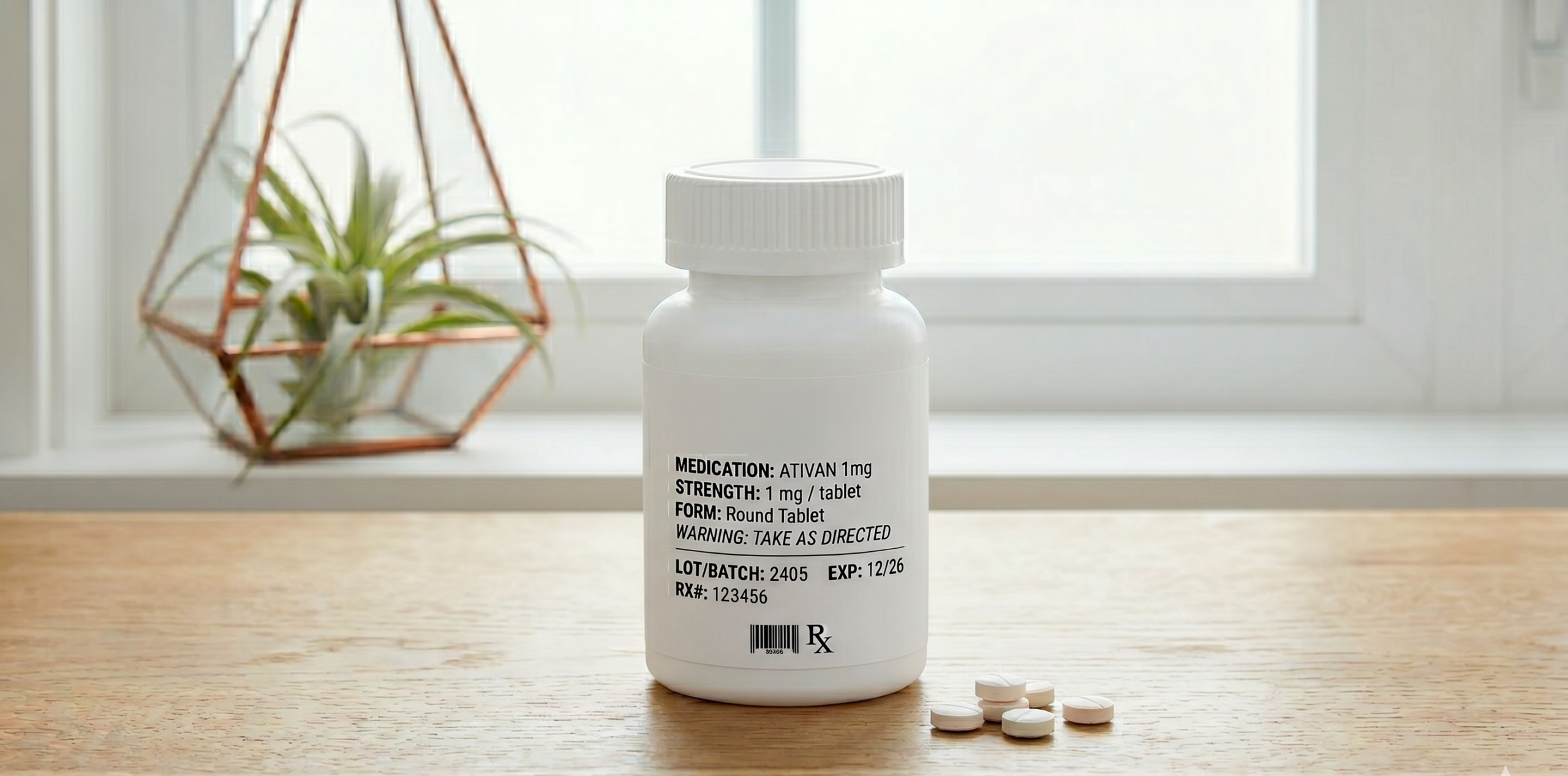
Ativan was first approved by the FDA in 1977 and is still commonly prescribed for short-term anxiety relief. It is available as tablets in 0.5 mg, 1 mg, and 2 mg strengths. It also comes as an oral liquid concentrate and as an injectable form that is usually used in hospital or emergency settings.
Lorazepam is considered an intermediate-acting benzodiazepine. This means it generally lasts longer than alprazolam, also known as Xanax, but is not as long-acting as clonazepam, also known as Klonopin. Another difference is the way lorazepam is processed by the body. It does not leave behind active byproducts that continue working after the medication is broken down. For some patients, including those taking multiple medications or those with certain liver concerns, this can make it a more predictable option.
At Kolli Psychiatric & Associates in Red Bank, NJ, Ativan is prescribed selectively. When it is used, it is usually part of a broader treatment plan that addresses the underlying anxiety, panic, or mood symptoms rather than only providing short-term symptom relief.
What does Ativan treat?
Ativan is used in several medical and psychiatric settings. In outpatient psychiatry, it is most often prescribed for short-term relief of intense anxiety, panic-like symptoms, or severe situational stress. In hospitals, lorazepam may also be used for sedation before procedures or for certain seizure emergencies.
FDA-approved uses of lorazepam include:
Anxiety symptoms related to anxiety disorders
Ativan may be prescribed for short-term relief of anxiety symptoms. It is not usually meant to be a long-term daily treatment for anxiety.
Anxiety associated with depression
Ativan may sometimes be used temporarily when anxiety symptoms occur alongside depression, usually while a longer-term treatment plan is being started.
Pre-procedure or pre-surgical sedation
Lorazepam may be used before certain procedures to reduce anxiety, cause sedation, and decrease memory of the procedure.
Status epilepticus
The injectable form of lorazepam is FDA-approved for status epilepticus, a serious seizure emergency usually treated in a hospital setting.
Common off-label or clinical uses include:
Acute panic symptoms
Ativan is sometimes used at the onset of a panic episode to reduce the intensity or duration of symptoms. This is usually reserved for select situations, not as the only treatment plan.
Short-term insomnia related to anxiety
When anxiety is the main reason someone cannot sleep, Ativan may occasionally be used for brief periods.
Alcohol withdrawal
Lorazepam is commonly used in alcohol withdrawal treatment, especially when liver concerns make some other benzodiazepines less ideal.
Catatonia
Lorazepam is widely used as a first-line treatment for catatonia and can sometimes produce rapid improvement.
Chemotherapy-related nausea
Ativan may be used as an add-on medication for nausea related to chemotherapy, especially anticipatory nausea, where nausea begins before treatment because of anxiety or prior experiences.
How does Ativan work?
Your brain has a natural calming signal called GABA. Think of GABA as the brake pedal for your nervous system. When it becomes more active, brain activity slows down, the body relaxes, and the nervous system feels less “revved up.”
Ativan, also known as lorazepam, works by strengthening this calming signal. It attaches to a specific site on GABA receptors and helps GABA work more effectively. The result is often a fairly quick reduction in anxiety, racing thoughts, muscle tension, and physical symptoms of “fight-or-flight,” such as a pounding heart, shallow breathing, or a wired, on-edge feeling.

Find an Expert Psychiatrist
› Licensed to prescribe
› Trusted by patients and families with 100+ Google reviews
How does Ativan make you feel?
When taken as prescribed, Ativan usually produces a sense of calm or relief rather than a dramatic change in mood. Patients often describe it as “the spiral stops,” “I can breathe again,” or “my body finally settles.”
If you take Ativan for acute anxiety or panic symptoms, the main feeling is often relief. Racing thoughts may slow down. Chest tightness may ease. The body may feel less tense and activated. For many people, this begins within about 20 to 30 minutes after taking it by mouth.
The most common side effect is sedation or drowsiness. In clinical data, sedation was reported by about 15.9% of anxious patients taking lorazepam. Some people also notice mental slowing, reduced coordination, or a foggy feeling, especially on the day they take it.
Ativan has a half-life of about 12 hours, which means its effects can sometimes linger after the most noticeable calming effect has passed. For some patients, that carryover calm can be useful if anxiety has been interfering with sleep. For others, it can be limiting, especially if they need to drive, work, study, or make quick decisions.
Ativan can quiet anxiety symptoms in the moment, but it does not usually treat the longer-term pattern that causes chronic anxiety. For ongoing anxiety, our clinicians at Kolli Psychiatric & Associates typically use Ativan selectively and pair it with longer-term strategies, such as SSRIs, SNRIs, buspirone, therapy, or lifestyle-based tools when appropriate. Patients across Monmouth County, Ocean County, and throughout New Jersey can discuss whether Ativan is a fit for their situation in person or through telehealth.
How should I take Ativan?
Ativan should be taken exactly as prescribed. Some patients take it only as needed for acute anxiety or panic symptoms. Others may be prescribed a short scheduled course, depending on the situation. In hospital settings, lorazepam may also be given by injection for specific medical reasons, such as seizure emergencies or procedural sedation.
For anxiety, the dose depends on the patient’s age, medical history, other medications, symptom severity, and whether Ativan is being used occasionally or on a short scheduled basis. The FDA label notes that oral Ativan dosing is individualized, with the usual total daily range given in divided doses. Lower doses are often used first, especially in older adults or patients who are more sensitive to sedation.
For many adults, an as-needed dose may fall in the 0.5 mg to 1 mg range, but some patients need less and some need more. A 2 mg dose is a stronger dose and may cause more sedation, coordination problems, or next-day grogginess. Patients should not increase the dose on their own.
For sleep difficulty related to anxiety, Ativan is sometimes prescribed at bedtime for short-term use only. This should be handled carefully because regular nighttime use can lead to tolerance, dependence, and rebound insomnia when the medication is stopped.
Practical tips for taking Ativan:
- Take Ativan only as directed by your prescriber. It may be taken with or without food.
- Do not mix Ativan with alcohol. Combining lorazepam with alcohol or other sedating medications can significantly increase sedation and may increase the risk of dangerous breathing problems.
- Do not drive, operate machinery, or do anything that requires full alertness until you know how Ativan affects you. The medication can slow reaction time, coordination, and judgment.
- If you take Ativan on a schedule and miss a dose, follow your prescriber’s instructions. In general, do not double up doses to make up for a missed dose.
- Do not stop Ativan suddenly if you have been taking it regularly. Benzodiazepines can cause withdrawal symptoms, and tapering should be done with medical guidance.
How long does Ativan take to work?
Ativan often begins to feel calming within about 20 to 30 minutes when taken by mouth, although the timing can vary from person to person. Its peak blood concentration occurs around 2 hours after an oral dose. This means some patients may feel early relief before the medication reaches its full effect.
Intravenous lorazepam works much faster and is used in hospital settings for specific situations, such as status epilepticus or procedural sedation. This is different from taking Ativan by mouth at home.
Ativan’s mean half-life is about 12 hours, but that does not mean the calming effect feels equally strong for 12 hours. Some people feel the main benefit for several hours, while others notice lingering drowsiness, slowed thinking, or fogginess later in the day or the next morning.
If someone is taking Ativan every day and still has significant anxiety, that is usually a reason to reassess the treatment plan rather than simply keep raising the dose. Benzodiazepines can reduce symptoms quickly, but they are not usually the best long-term foundation for chronic anxiety treatment. The FDA label notes that the effectiveness of Ativan for long-term use beyond 4 months has not been systematically assessed, and the need for continued treatment should be periodically reassessed.

Work With an Executive Function Coach
› Practical strategies for ADHD
› Build systems that work with your brain, not against it
How long does Ativan stay in your system?
Ativan, also known as lorazepam, has an average half-life of about 12 hours. This means it takes about 12 hours for the body to clear half of a dose. Its main inactive metabolite has a longer half-life of about 18 hours.
For many people, most of a single dose is cleared from the body within a few days. The exact timing can vary based on the dose, age, liver and kidney function, frequency of use, and other medications. Urine drug screens may detect lorazepam for several days after use, and sometimes longer in people taking it regularly.
Because Ativan is an intermediate-acting benzodiazepine, people who take it on a daily schedule may reach steadier blood levels after a few days. That does not mean the brain returns to baseline as soon as the medication is no longer detectable. With regular use, the nervous system can adapt to Ativan, which is one reason withdrawal symptoms may occur if it is stopped suddenly.
Physical dependence is more likely with higher doses, longer use, or daily use. If someone has been taking Ativan regularly, it should usually be tapered with medical guidance rather than stopped abruptly. The lorazepam label specifically warns that abrupt discontinuation should be avoided after extended therapy.
Is Ativan safe to take during pregnancy?
Ativan is not usually a first-choice medication during pregnancy, although it may be considered in select situations when the benefits outweigh the risks. This decision should be made carefully with the prescribing clinician and OB-GYN.
The research on Ativan and pregnancy can be difficult to interpret. Lorazepam can reach the baby during pregnancy because it crosses the placenta. While some studies have raised concerns about possible birth defect risks, larger and more recent reviews have not shown a clear major increase in overall risk. MotherToBaby notes that lorazepam is unlikely to significantly increase the chance of birth defects overall.
Use later in pregnancy can sometimes cause temporary symptoms in newborns after birth. These may include irritability, sleep problems, tremors, jitteriness, trouble breathing, muscle weakness, poor feeding, or excess sleepiness. Not every baby exposed to lorazepam will have these symptoms, and when symptoms occur, they usually improve with medical monitoring and support.
The decision is not always simple. For some patients, untreated severe anxiety, panic, or insomnia can also create risks, including poor sleep, worsening symptoms, and difficulty functioning during pregnancy. For others, it may make sense to avoid Ativan, use it only briefly, or consider other treatment options.
These decisions come up often in women’s mental health and should be individualized. Ideally, the patient, psychiatrist, and OB-GYN should weigh the risks of the medication against the risks of untreated symptoms and choose the safest realistic plan.
If anxiety, depression, or mood symptoms emerge or worsen after delivery, it is also important to screen for postpartum depression or postpartum anxiety rather than assuming everything is part of normal adjustment.
Ativan does pass into breast milk in small amounts. LactMed notes that lorazepam has low levels in breast milk and that usual maternal doses have not been associated with adverse effects in most breastfed infants. Infants should still be monitored for sedation, poor feeding, and poor weight gain.
What are the side effects of Ativan?
Common side effects (≥5%):
- Drowsiness and sedation (about 15 to 16 percent of patients)
- Fatigue
- Dizziness or unsteadiness
- Weakness
- Cognitive slowing — “fuzzy” thinking, memory complaints
- Dry mouth
- Nausea
Less common but clinically important:
- Paradoxical reactions — increased agitation, irritability, or anxiety, particularly in older adults and children.
- Memory impairment — anterograde amnesia (difficulty forming new memories) at higher doses, particularly with IV use.
- Depressed mood or worsening depression.
- Falls — particularly in older adults.
- Slowed breathing — particularly with higher doses or combination with other CNS depressants
Black Box Warning — Concurrent Opioid Use
Ativan carries an FDA black box warning for use with opioid pain medications. Combining benzodiazepines with opioids can produce profound sedation, slowed breathing, coma, and death. This combination should be avoided whenever possible. If both medications are clinically necessary, the lowest effective doses of each should be used and patients should be monitored closely.
The FDA Drug Safety Communication outlines the data behind this warning, and our broader overview of black-box warnings on psychiatric medications puts it in context.
If you or someone you know is in crisis, call or text 988 to reach the 988 Suicide and Crisis Lifeline.
Stopping Ativan: what you should know about discontinuation
With regular daily use, the body can adapt to Ativan, and if it is stopped suddenly or reduced too quickly, withdrawal symptoms can occur. Some people use the term “discontinuation symptoms,” but with benzodiazepines, “withdrawal” is the more common and clinically recognized term.
Physical dependence is not the same thing as addiction. Dependence means the body has adapted to the medication and may react when the medication is lowered or stopped. Addiction involves a pattern of compulsive use, cravings, loss of control, or continued use despite harm.
A person can become physically dependent on Ativan even when taking it exactly as prescribed. The risk increases with higher doses, longer duration of use, and daily use. Withdrawal symptoms can sometimes appear after relatively short periods of consistent use, which is one reason Ativan should be prescribed thoughtfully and reassessed over time. The FDA labeling for Ativan warns that abrupt discontinuation or rapid dose reduction can cause withdrawal reactions, and that tapering may be needed after extended use.
Common Ativan withdrawal symptoms may include:
- Rebound anxiety, sometimes more intense than the original anxiety
- Insomnia
- Tremor or shakiness
- Sweating
- Nausea
- Muscle tension or headache
- Sensitivity to light, sound, or touch
- Irritability, restlessness, or feeling physically “wired”
- In severe cases, seizures, especially after high-dose or long-term use
Ativan should not be stopped suddenly after regular daily use unless there is a specific medical reason and the patient is being closely monitored. A safer approach is usually a gradual, individualized taper. For some people, this may take weeks. For others, especially after long-term use, it may take months.
Some patients do well with small, direct reductions in lorazepam. Others may benefit from switching to a longer-acting benzodiazepine, such as diazepam, to make the taper smoother. This is not the right approach for everyone, and it should be decided by the prescribing clinician based on age, medical history, liver function, dose, duration of use, and prior withdrawal symptoms. ASAM’s benzodiazepine tapering guideline recommends tailoring the taper to the individual and slowing or pausing the taper if significant withdrawal symptoms emerge.
At Kolli Psychiatric & Associates, we help patients taper benzodiazepines carefully and collaboratively. For patients in Monmouth County, Ocean County, and throughout New Jersey, this may include in-person or telehealth visits, depending on the clinical situation. The goal is not to rush the process. The goal is to reduce risk, keep symptoms manageable, and make sure the patient is not left to discontinue Ativan alone.
Ativan in older adults
Benzodiazepines, including Ativan, require extra caution in adults 65 and older. The American Geriatrics Society Beers Criteria lists benzodiazepines as potentially inappropriate for many older adults because they can increase the risk of cognitive impairment, delirium, falls, fractures, and motor vehicle crashes. Older adults may also be more sensitive to these medications.
This does not mean Ativan can never be used in older adults. In some cases, a short-term or situational dose may still be appropriate. The key is careful prescribing.
When Ativan is used in an older adult, clinicians usually consider lower starting doses, shorter duration of use, and close monitoring for sedation, balance problems, confusion, memory changes, and next-day grogginess. Longer-term use is generally avoided when safer alternatives are available.
Key takeaways
- Ativan (lorazepam) is an intermediate-acting benzodiazepine that works on GABA receptors to rapidly reduce anxiety.
- Onset is 20 to 30 minutes orally, with a 12 to 18 hour half-life — useful for both PRN situational anxiety and short-term scheduled use.
- Standard adult PRN dosing is 0.5 to 1 mg, with a typical maximum daily dose of 6 mg in outpatient settings.
- Black box warning: do not combine with opioids without close clinical supervision.
- Physical dependence can develop with regular daily use and increases with dose and duration; never stop abruptly after long-term daily use — taper under provider supervision.
- Older adults are particularly sensitive: lower doses, shorter duration, and consideration of alternatives are standard practice.
Looking for anxiety treatment in New Jersey?
Kolli Psychiatric & Associates provides psychiatric care for patients across Monmouth County, Ocean County, Red Bank, and statewide via telehealth. If you are exploring whether Ativan is right for your situation — or working through whether to start, continue, or taper a benzodiazepine — we work collaboratively with patients on individualized treatment plans.
Related reading on kollipsych.com
- Read our companion guide: Frequently Asked Questions: Ativan (Lorazepam)
- If you are evaluating ongoing anxiety treatment: Does Anxiety Medication Work?
- If you are also taking cold or allergy medication: Which Cold Medications Are Safe to Take with Antidepressants and Anxiety Medications?
- For ongoing therapy alongside medication: Talk Therapy Services in New Jersey
This article is for educational purposes and does not replace medical advice from your prescribing provider.